Build-a-Bowl: A Practical Method for Balanced Grain Bowls
Grain bowls are less a recipe than a structure: a base, a protein, vegetables or pickles, a dressing, and a finishing element. Treating them as a method makes weeknight dinners and meal-prep lunches more reliable. Below is a practical, step-by-step approach, followed by a neutral comparison of materials and methods, several variations, and troubleshooting for common problems.
Step-by-step method
-
Plan your bowl (2–5 minutes).
Decide on one grain, one protein, one hot or roasted vegetable component, one raw or pickled component, and a dressing. Balance textures and flavors: creamy, crunchy, acidic, and savory.
-
Cook the grain (20–40 minutes depending on grain).
Rinse if needed. Use the grain-to-water ratio recommended for the grain (for example, 1:2 for many long-grain rices, 1:1.5 for quinoa). Put on low simmer and set a timer—while the grain cooks you can prepare everything else.
-
Prepare the protein (10–20 minutes).
For quick options: pan-seared tofu, canned chickpeas warmed and spiced, or a fried egg. For longer-cooking items such as lentils, start them with the grain or use pre-cooked/canned beans to keep timing simple.
-
Roast or sauté vegetables (15–25 minutes).
Cut vegetables into uniform pieces. Roast at 200°C/400°F until caramelized, or sauté in a wide skillet for a faster finish. Season simply with salt and oil; you can add spices or herbs near the end.
-
Make a quick dressing (2–5 minutes).
Combine an acid (vinegar or citrus), an oil, and a seasoning agent (mustard, miso, tahini, soy) in a small jar and shake. Taste and adjust: more acid for brightness, more oil for roundness, more seasoning for umami.
-
Assemble (3–5 minutes).
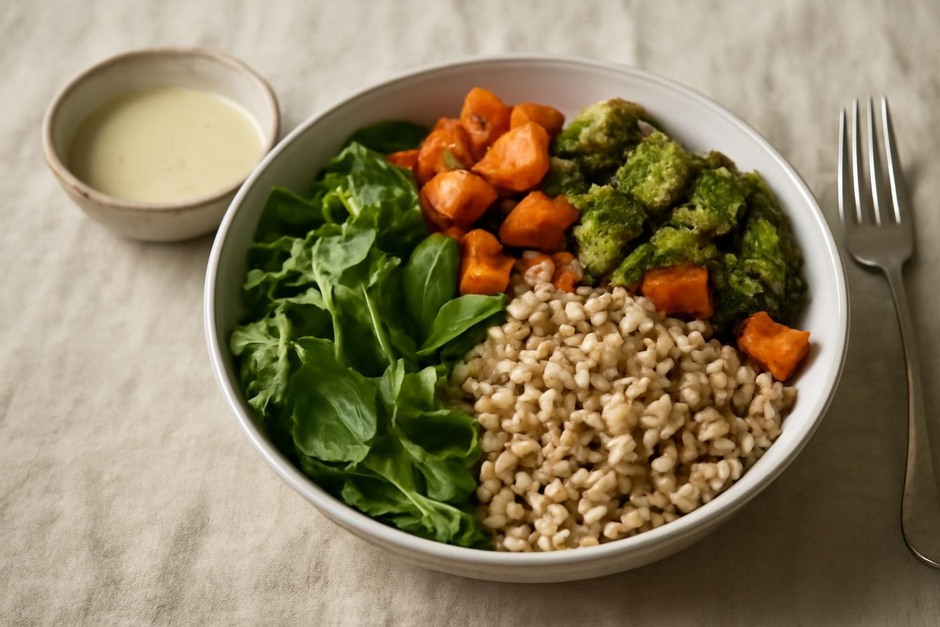
Spoon the grain into the bowl, add the protein, pile the warm vegetables on one side and raw/pickled components on the other. Drizzle dressing and add a finishing element—nuts, seeds, herbs, or a crumbled cheese.
Materials and method: neutral comparisons and trade-offs
-
Pots for grains.
Heavy-bottomed saucepans hold heat steadily and reduce scorching; a tight-fitting lid prevents steam loss. A rice cooker offers convenience and consistent results, but uses extra counter space and limits small-batch flexibility.
-
Pans for vegetables and protein.
Cast-iron skillets provide excellent sear and retain heat, perfect for caramelization, but require seasoning and are heavy. Nonstick pans are quicker to clean and ideal for eggs or delicate items, though they won’t build the same fond for deglazing.
-
Roasting vs sautéing.
Roasting creates even caramelization and is mostly hands-off—good for large batches. Sautéing is faster and better for quick-cooking vegetables, but can require more attention and technique to avoid steaming.
-
Proteins: canned vs cooked from scratch.
Canned beans and lentils save time and are consistent, while cooking from dried pulses allows control of texture and salt but adds soaking or longer cooking time.
Variations
- Warm-bowl shift. Use a warm grain and hot sautéed vegetables with a cool, crisp salad on top for contrast—good in colder months.
- Cold-bowl prep. Chill grains and roast vegetables ahead; assemble with a cold dressing for a ready-to-go lunch.
- Leaner vs richer bowls. Choose lighter dressings (yogurt, lemon, vinegar-based) and more raw vegetables for a leaner bowl; use tahini, avocado, or cheese for richness.
- Regional templates. Swap elements to echo cuisines—Mediterranean: farro, roasted eggplant, chickpeas, tzatziki. East-Asian: short-grain rice, sesame tofu, quick-pickled cucumbers, soy-sesame dressing.
Troubleshooting
-
Grain is gummy or mushy.
Likely too much water or overcooking. Rinse certain grains before cooking to remove surface starch. Next time reduce water slightly and monitor at the end of the recommended cooking time; try the steaming method (bring to boil, then very low heat with lid until water absorbed).
-
Vegetables are soggy, not caramelized.
They were overcrowded or too wet. Roast in a single layer with space between pieces and pat wet vegetables dry before oiling. For sautéing, use a hot pan and avoid adding too much at once.
-
Bowl feels flat or one-note.
Add an acidic element (a squeeze of lemon, a splash of vinegar, or a quick pickle) and a crunchy finish (toasted seeds, nuts, or crisped shallots) to create contrast.
-
Dressing separates or tastes oily.
Whisk or shake vigorously before dressing. Emulsifiers like mustard, miso, or a spoonful of yogurt help bind oil and acid; add a little hot water to loosen if too thick.
This method is intentionally flexible: choose materials and approaches that suit your rhythms. The aim is a repeatable structure that rewards small adjustments—swap a grain, try a new dressing, or roast a different vegetable—and you will quickly learn which trade-offs matter most in your kitchen.